
17.2.1 - Relationships with regional NGOs and government for SDG policy
17.2.1 – Relationships with regional NGOs and government for SDG policy
直接參與或投入國家政府(national government)或區域非政府組織
(regional NGOs)的SDG政策制定。
-Have direct involvement in, or input into, national government or regional non-government organisations, SDG policy development – including identifying problems and challenges, developing policies and strategies, modelling likely futures with and without interventions, monitoring and reporting on interventions, and enabling adaptive management.
v List of Evidence
1. Green University Union of Taiwan (GUUT)
2. Academic staffs as the directors of the Citizen of the Earth, Taiwan
3. Collaborators of the College of Environmental Studies, including the Kuroshio Ocean Education Foundation
4. Center for Interdisciplinary Research on Ecology and Sustainability
5. Graduate Institute of Marine Biology (satellite campus) cooperated with National Museum of Marine Biology and Aquarium (NMMBA)
6. Center for International Indigenous Affairs
7. University as a body collaborate with the Society for Taiwan Amphibian Conservation
8. Satoyama Initiative (里山倡議)
9. NDHU Professor Kuang-Chung Lee Honored as a “Distinguished Contributor to Forestry and Nature Conservation” for His Outstanding Achievements in Promoting the Satoyama Initiative
1. Green University Union of Taiwan (GUUT)
The Green University Union of Taiwan (GUUT) is a non-profit organization. The goal of GUUT is to advance the sustainable development of universities in Taiwan. Through encouraging cooperation and building partnerships among universities, development resources for promoting Green Universities can be strived for jointly. Further, the social responsibility of universities will be fulfilled.
National Dong Hwa University is a permanent member of the organization.
(1) GUUT website: http://www.guut.org.tw/about_people.php?page=4
2. Academic staff member as a supervisor at Citizen of the Earth, Taiwan
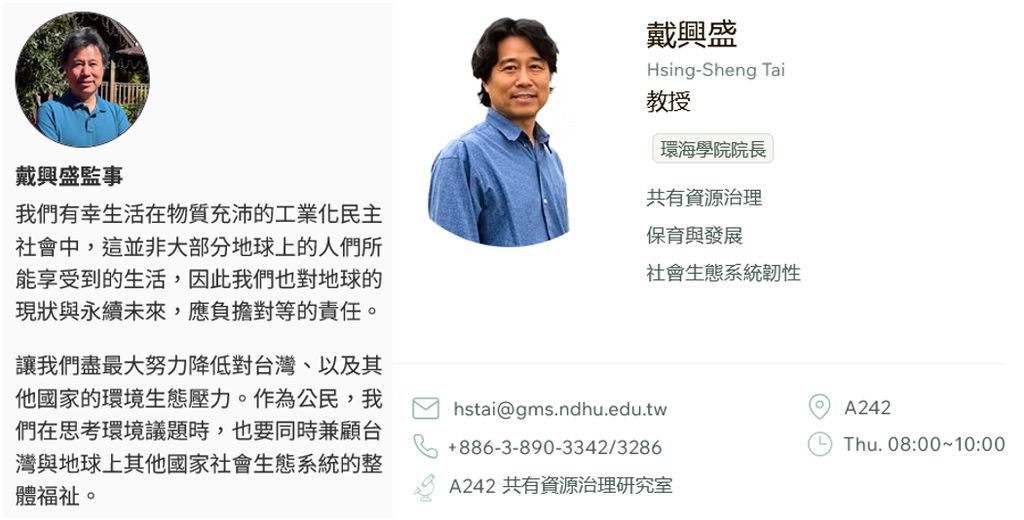
Citizen of the Earth, Taiwan (CET) is a local environmental protection foundation in Taiwan. Our team consists of environmental practitioners with more than twenty years of experience in Taiwan.
A member of our academic staff from the Department of Natural Resources and Environmental Studies is a supervisor at Citizen of the Earth, Taiwan.
– Citizen of the Earth website:
(1) https://www.cet-taiwan.org/about/english
(2) https://www.cet-taiwan.org/page/1559
3. Academic staff member as a board member at Kuroshio Ocean Education Foundation
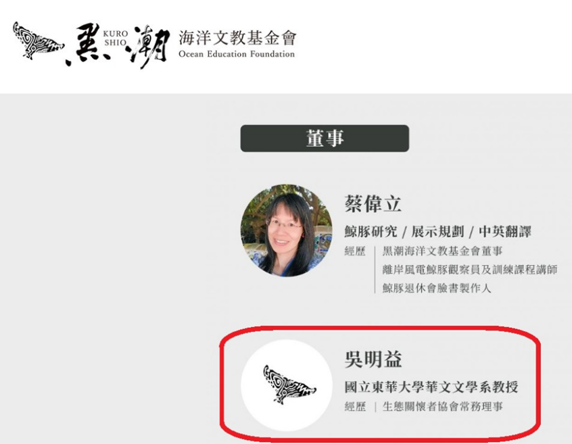
Kuroshio Ocean Education Foundation (KOEF) was founded in 1998 and is the first non-profit organization with emphasis on marine wellbeing in Taiwan. For decades, KOEF has taken efforts on whale and dolphin conservation and relevant marine issues, with passionate involvement in environmental education and scientific investigation.
A member of our academic staff from the Department of Sinophone Literatures and Creative Writing is a board member at Kuroshio Ocean Education Foundation, Taiwan.
(1) Kuroshio Ocean Education Foundation
https://www.kuroshio.org.tw/newsite/index.php
(Department of Sinophone Literatures and Creative Writing, National Dong Hwa University東華大學華文文學系)
4. Center for Interdisciplinary Research on Ecology and Sustainability, National Dong Hwa University
In January 2020, the Center for Interdisciplinary Research on Ecology and Sustainability (CIRES) was launched, hosted by the College of Environmental Studies, National Dong Hwa University, Hualien. Our mission at CIRES is to advance research on the resilience of socio-ecological systems in the face of global change, facilitating better governance outcomes that take into account environmental, social and economic concerns.
(1) CIRES website: https://trh.gase.most.ntnu.edu.tw/en/article/content/125
5. Graduate Institute of Marine Biology(satellite campus) cooperated with National Museum of Marine Biology and Aquarium (NMMBA)
In 2005, National Museum of Marine Biology and Aquarium (NMMBA) together with the National Dong Hwa University established Institute of Marine Biotechnology (MBT) and Institute of Marine Biodiversity and Evolutionary Biology. The two institutes was established in Checheng, Pingtung of NMMBA, allow students to be directly taught by the professional lecturers, use the high technology research facilities and engage in local, unique and prospective of marine science research in future.
The NDHU–NMMBA partnership established Taiwan’s first joint university-museum graduate institutes, bridging academic education with real-world marine research.
(1) Graduate Institute of Marine Biology, Nationl Dong Hwa University https://imb.ndhu.edu.tw/p/412-1016-15165.php?Lang=en
(2) National Museum of Marine Biology and Aquarium https://www.nmmba.gov.tw/En/
6. Center for International Indigenous Affairs, National Dong Hwa University
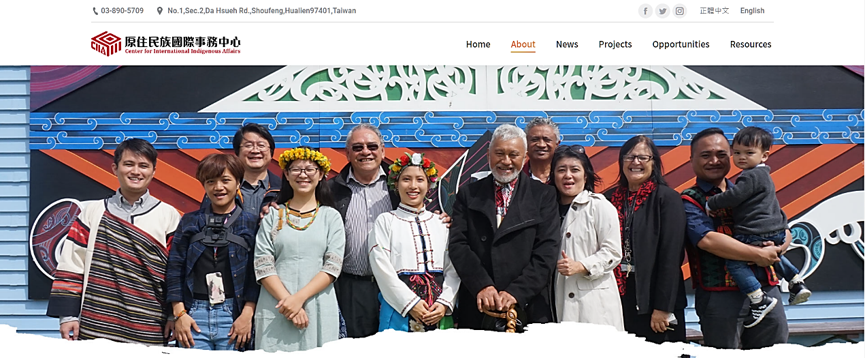
The Center for International Indigenous Affairs (CIIA) provide innovative programs dedicated to the educational sovereignty of indigenous peoples of Taiwan and the world. With strong relationships, we perform research, facilitate indigenous cultural exchanges, and coordinate academic activities on a local, national, and international level. By contributing to the development of indigenous knowledge and advancement of related social issues, CIIA is at the forefront of global indigenous solidarity celebrating indigenous identity, dignity, and sovereignty.
(1) https://www.iia.ndhu.edu.tw/en/about/
(2) https://www.facebook.com/indigenous.peoples.international.affairs/

7. University as a body collaborate with the Society for Taiwan Amphibian Conservation
The Taiwan Amphibian Survey & Conservation Database (Taiwan Amphibians DB) is a platform dedicated to tracking, documenting, and protecting Taiwan’s native amphibian species through citizen science and academic research.
National Dong Hwa University (NDHU) is not just a partner in the project—it is the academic backbone and primary institutional engine behind the platform.
Here is how NDHU drives and sustains the Taiwan Amphibian Survey & Conservation Database:
- Scientific Leadership & Management: The platform was created and continues to be directed by Dr. Yi-Ju Yang (楊懿如教授) and her lab in NDHU’s Department of Natural Resources and Environmental Studies. Dr. Yang—often called Taiwan’s “Frog Mother”—pioneered citizen-science frog conservation in Taiwan.
- Database & IT Infrastructure: NDHU hosts, maintains, and processes the massive ecological dataset, transforming raw volunteer field observations into standardized, peer-reviewed biodiversity data.
- Citizen Science Training Hub: NDHU organizes and certifies volunteer survey teams across Taiwan, providing standard operating procedures (SOPs), species identification training, and field survey protocols.
- Policy & Conservation Impact: The data aggregated by NDHU directly informs Taiwan’s official conservation strategies, helping the Forestry and Nature Conservation Agency (FANCA) track invasive species (like the cane toad and bullfrog) and protect endangered native species (such as the Taipei green tree frog).
In short, NDHU provides the academic rigor, scientific framework, and technological platform that turns public volunteer efforts into actionable wildlife conservation data.
(1) Taiwan Amphibian Conservation website: https://tad.froghome.org/
8. Bridging Global Conservation to Taiwan: Prof. Kuang-Chung Lee and NDHU as Taiwan’s First IPSI Member
Following the adoption of the Satoyama Initiative at CBD-COP10 in 2010, Prof. Kuang-Chung Lee brought this global conservation framework to Taiwan. Under his guidance and facilitation, National Dong Hwa University (NDHU) officially joined the International Partnership for the Satoyama Initiative (IPSI) in March 2011, making it Taiwan’s very first IPSI member.
(1) Satoyama Initiative website: https://satoyamainitiative.org/
(2) Prof. Kuang-Chung Lee from NDHU: https://sys.ndhu.edu.tw/RD/TeacherTreasury/tlist.aspx?tcher=11476
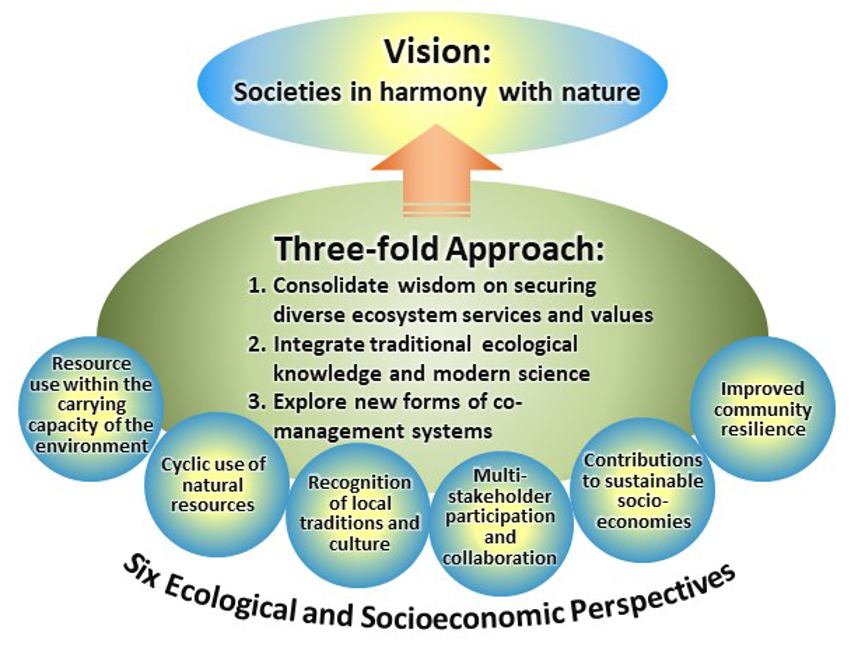
9. NDHU Professor Kuang-Chung Lee Honored as a “Distinguished Contributor to Forestry and Nature Conservation” for His Outstanding Achievements in Promoting the Satoyama Initiative
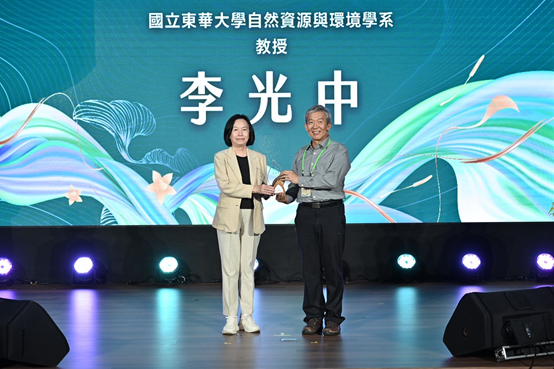
Prof. Kuang-Chung Lee of NDHU’s Department of Natural Resources and Environmental Studies has been awarded the “Distinguished Contributor to Forestry and Nature Conservation” by the Ministry of Agriculture. Known as a key pioneer of Taiwan’s Satoyama Initiative, Prof. Lee founded the Taiwan Partnership for the Satoyama Initiative (TPSI), connecting 28 domestic organizations to international networks. The award, presented at the “Green Oscars” ceremony on October 18, recognizes his leadership in uniting academic, civic, and governmental efforts to advance community forestry and sustainable land use.
(1) NDHU Professor Kuang-Chung Lee Honored as a “Distinguished Contributor to Forestry and Nature Conservation”: https://www.ndhu.edu.tw/p/406-1000-249505,r4956.php?Lang=EN#Dyn_2_2
17.2.2 Cross sectoral dialogue about SDGs
17.2.2 Cross sectoral dialogue about SDGs
發起並參與有關永續發展目標(SDGs)的跨領域對話
(例如舉辦或參加涵蓋政府單位或非政府組織(NGOs)的研討會與論壇)。
-Initiate and participate in cross-sectoral dialogue about the SDGs,
e.g. conferences involving government or NGOs.
v List of Evidence
1. Center for International Indigenous Affairs, National Dong Hwa University
2. University as a body collaborate with the Society for Taiwan Amphibian Conservation
3. Cross-Sector Collaboration to Advance Taipei Grass Frog Conservation and North Coast Low Mountain Restoration
4. Taiwan University Alliance for Sustainable Governance
5. Two NDHU Projects Selected for the 2025 University Social Responsibility Expo
6. Launching the Sustainable Agriculture Alliance: Safeguarding Agricultural Product Quality with Rapid Mass Spectrometry Screening
1. Center for International Indigenous Affairs, National Dong Hwa University
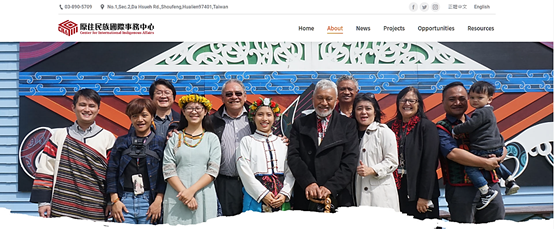
The Center for International Indigenous Affairs (CIIA) provide innovative programs dedicated to the educational sovereignty of indigenous peoples of Taiwan and the world. With strong relationships, we perform research, facilitate indigenous cultural exchanges, and coordinate academic activities on a local, national, and international level. By contributing to the development of indigenous knowledge and advancement of related social issues, CIIA is at the forefront of global indigenous solidarity celebrating indigenous identity, dignity, and sovereignty.
(1) https://www.iia.ndhu.edu.tw/en/about/
(2) https://www.facebook.com/indigenous.peoples.international.affairs/

2. University as a body collaborate with the Society for Taiwan Amphibian Conservation
The Taiwan Amphibian Survey & Conservation Database (Taiwan Amphibians DB) is a platform dedicated to tracking, documenting, and protecting Taiwan’s native amphibian species through citizen science and academic research.
National Dong Hwa University (NDHU) is not just a partner in the project—it is the academic backbone and primary institutional engine behind the platform.
Here is how NDHU drives and sustains the Taiwan Amphibian Survey & Conservation Database:
- Scientific Leadership & Management: The platform was created and continues to be directed by Dr. Yi-Ju Yang (楊懿如教授) and her lab in NDHU’s Department of Natural Resources and Environmental Studies. Dr. Yang—often called Taiwan’s “Frog Mother”—pioneered citizen-science frog conservation in Taiwan.
- Database & IT Infrastructure: NDHU hosts, maintains, and processes the massive ecological dataset, transforming raw volunteer field observations into standardized, peer-reviewed biodiversity data.
- Citizen Science Training Hub: NDHU organizes and certifies volunteer survey teams across Taiwan, providing standard operating procedures (SOPs), species identification training, and field survey protocols.
- Policy & Conservation Impact: The data aggregated by NDHU directly informs Taiwan’s official conservation strategies, helping the Forestry and Nature Conservation Agency (FANCA) track invasive species (like the cane toad and bullfrog) and protect endangered native species (such as the Taipei green tree frog).
In short, NDHU provides the academic rigor, scientific framework, and technological platform that turns public volunteer efforts into actionable wildlife conservation data.
(1) Taiwan Amphibian Conservation website: https://tad.froghome.org/
3. Cross-Sector Collaboration to Advance Taipei Grass Frog Conservation and North Coast Low Mountain Restoration
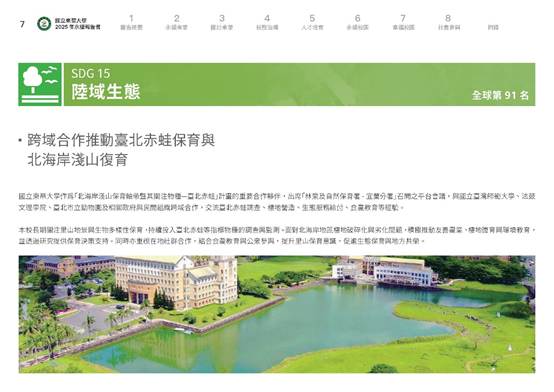
As a key partner in the “North Coast Low-Elevation Mountain Conservation Corridor and Its Target Species—Taipei Grass Frog” project, NDHU attended a platform meeting convened by the Yilan Branch of the Forestry and Nature Conservation Agency. The University collaborated across sectors with National Taiwan Normal University, Dharma Drum Institute of Liberal Arts, Taipei Zoo, and government and civil society organizations to exchange experiences in Taipei grass frog surveys, habitat restoration, payments for ecosystem services, and food and agriculture education.
The University has long been committed to protecting Satoyama landscapes and biodiversity and continues to survey and monitor the Taipei grass frog and other indicator species. To address habitat fragmentation and degradation in the North Coast region, it actively promotes environmentally friendly farming, habitat restoration, and environmental education, while providing research-based support for conservation decision-making. It also works closely with local communities, integrating food and agriculture education with public participation to raise awareness of Satoyama stewardship and foster ecological sustainability and local well-being.
4. Taiwan University Alliance for Sustainable Governance
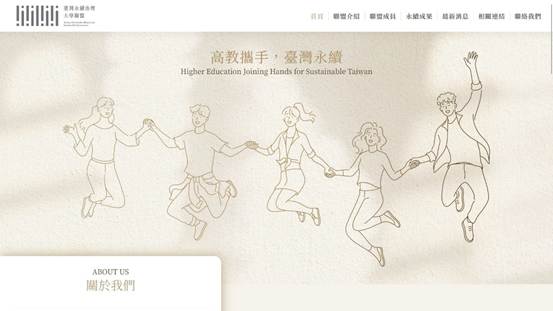
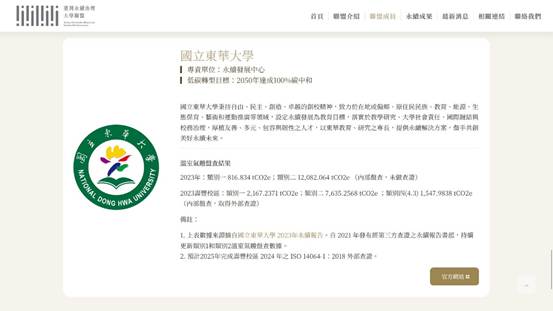
Taiwan University Alliance for Sustainable Governance (TUASG) was jointly established in 2022 by nine Taiwanese universities: National Taiwan University (NTU), National Taiwan Normal University (NTNU), National Taiwan University of Science and Technology (Taiwan Tech), National Taiwan Ocean University (NTOU), National Central University (NCU), National Chung Hsing University (NCHU), National Sun Yat-sen University (NSYSU), National Pingtung University of Science and Technology (NPUST), and National Dong Hwa University (NDHU).
The Alliance aims to build a collaborative network that facilitates the exchange and sharing of information, knowledge, and best practices related to sustainable university governance within the Taiwanese context. Through this partnership, member institutions jointly assume responsibility for advancing sustainable development and university social responsibility, working together toward the achievement of the Sustainable Development Goals (SDGs) and the creation of a high-quality, sustainable future.
(1) Taiwan University Alliance for Sustainable Governance website: https://tuasg.com/
(2) Member List: https://tuasg.com/%e8%81%af%e7%9b%9f%e6%88%90%e5%93%a1/
5. Two NDHU Projects Selected for the 2025 University Social Responsibility Expo
The 2025 University Social Responsibility Expo (USR EXPO) is organized by the Center for University Social Responsibility, commissioned by the Ministry of Education. Since 2018, the Ministry has been promoting the University Social Responsibility (USR) program, encouraging universities to apply their expertise to help solve local issues. Now in its eighth year, the program has taken root in communities across Taiwan, advancing toward sustainable development. This year’s Expo invites USR project teams from universities and colleges nationwide to showcase their achievements, aiming to deepen public understanding of USR and foster dialogue with society.
(1) USR EXPO 2025 website: https://2025usrexpo.org.tw/en
(2) Two NDHU Projects Selected for the 2025 University Social Responsibility Expo https://2025usrexpo.tca.org.tw/project/FileLinksPage?keyword=National+Dong+Hwa+University&pageSize=30&pageOf=1
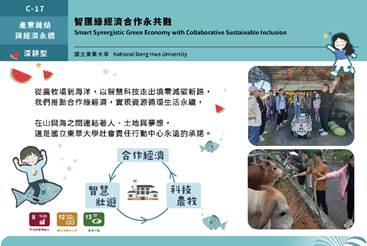
▲ 智匯綠經濟合作永共融(Smart Synergistic Green Economy with Collaborative Sustainable Inclusion)
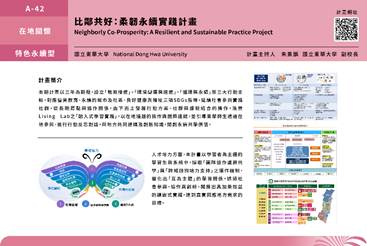
▲ 比鄰共好:柔韌永續實踐計畫(Neighborly Co-Prosperity A Resilient and Sustainable Practice Project)
6. Launching the Sustainable Agriculture Alliance: Safeguarding Agricultural Product Quality with Rapid Mass Spectrometry Screening
To promote cross-sector collaboration among industry, government, and academia and establish a resource-sharing platform, the Technology Service Center organized the signing ceremony for the “Food Safety and Sustainable Agriculture Alliance” memorandum of understanding, bringing together 102 professionals from the Hualien County Government, farmers’ associations, and cooperatives. The Alliance is committed to enhancing the safety, quality, and reliability of local agricultural products and provides professional services including agricultural testing, organic certification, ESG services, carbon inventory services, and sustainability consulting. Through technical exchanges and the dissemination of results, the initiative strengthens the connection between agricultural knowledge and practice. A mass spectrometry rapid screening vehicle was also introduced to enhance real-time food safety monitoring. Moving forward, the Alliance will continue to adopt technology-enabled governance, support industry transformation, and strengthen agricultural resilience, advancing the vision of regional co-prosperity and sustainable agriculture.
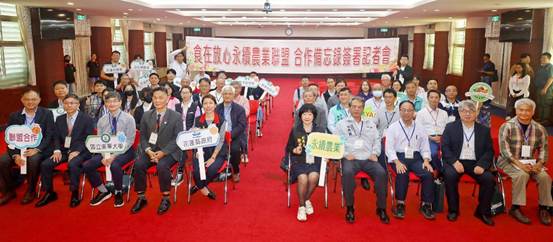
▲ Press conference for the “Food Safety and Sustainable Agriculture Alliance” MOU signing